Mata’ali’i: When the Ancestors Return

Mata’ali’i: When the Ancestors Return

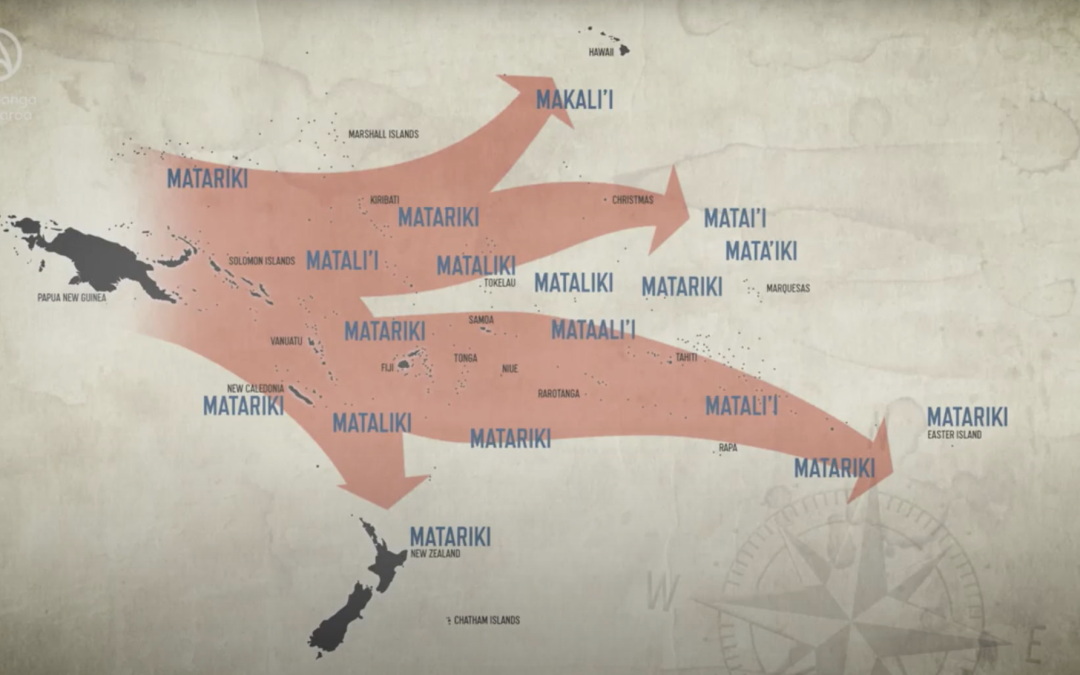
Across the Pacific, we look to the night sky and see more than stars.

In Aotearoa they are known as Matariki. In Hawai’i, Makali’i. In Samoa, Matali’i.

The rising of this sacred cluster marks the beginning of a new season. A time to gather, to remember those who came before us, to give thanks for the harvest, and to prepare for what lies ahead. For generations, our Pacific ancestors read the stars as a calendar, a compass and a reminder that we are never separate from the land, the ocean or each other.

At Living Koko, Mata’ali’i is deeply personal.

It is a time when I think of my grandfather, Laulu Sesole John Stanley, and the stories he carried. His chiefly title, his wisdom, and the generations before him remind me that we are only temporary custodians of something much greater than ourselves.

Our family’s history with cacao stretches back more than 200 years, across Samoa and Togo. For generations, our family has grown, nurtured and been connected to cacao across continents, carrying with us not only the knowledge of cultivation, but the understanding that cacao is a gift meant to bring people together. Every harvest reminds us that we are part of a story much larger than ourselves – one rooted in ancestry, stewardship and the enduring connection between people, land and spirit.


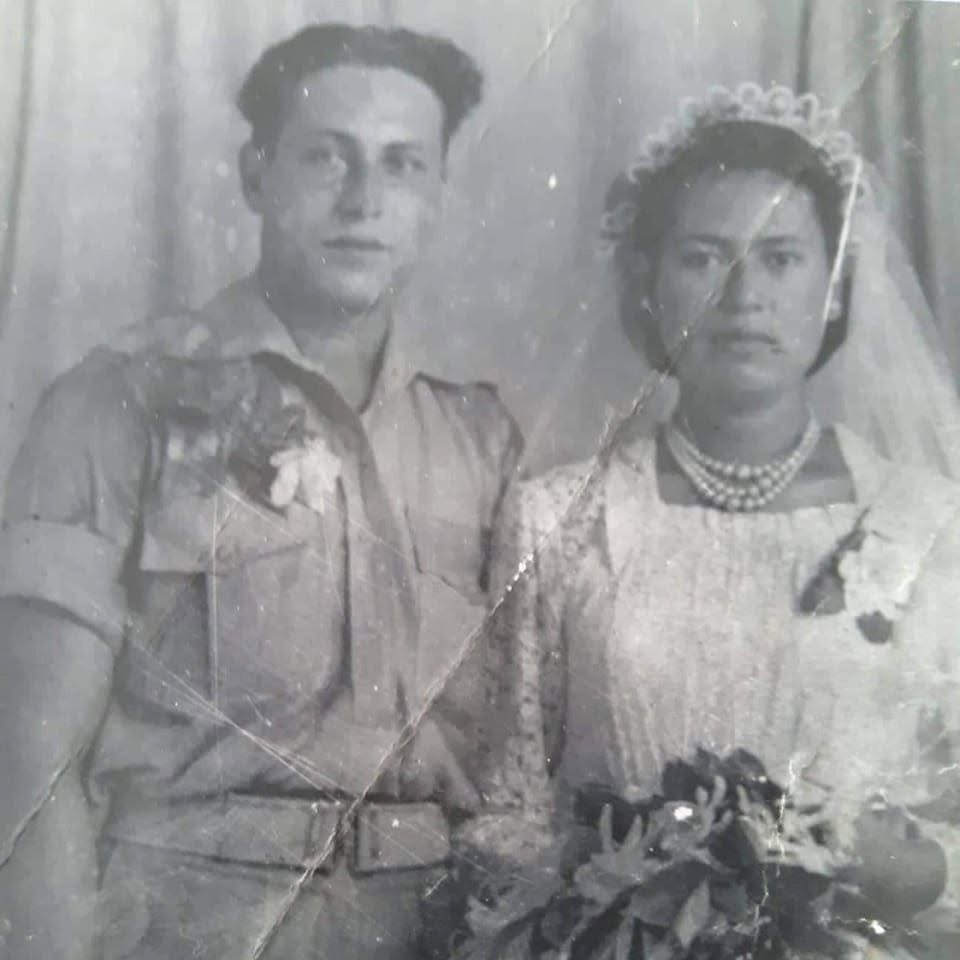
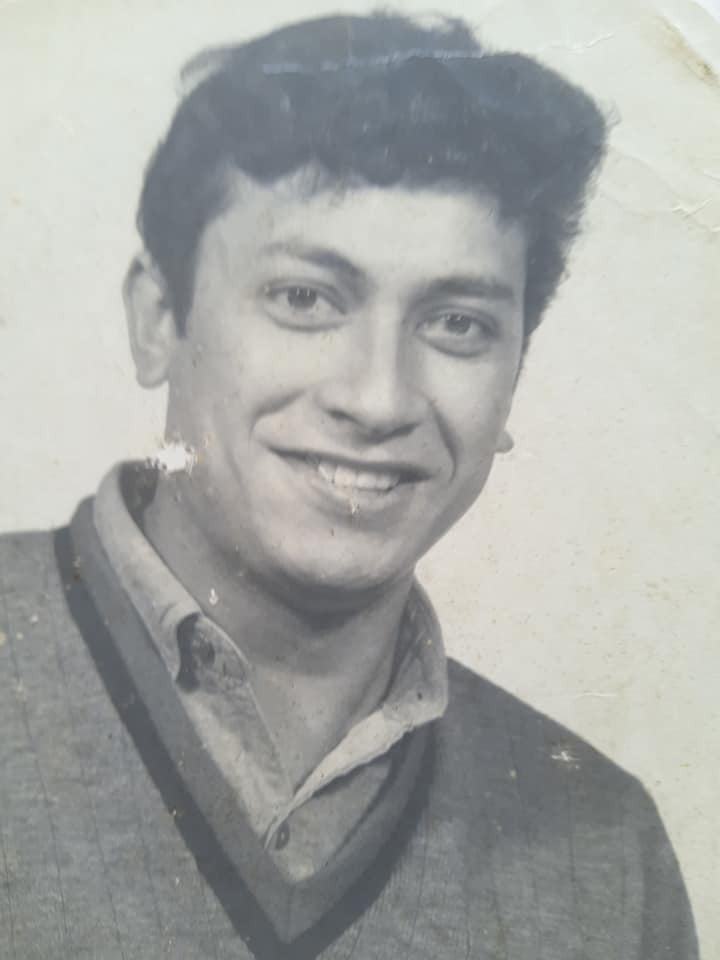
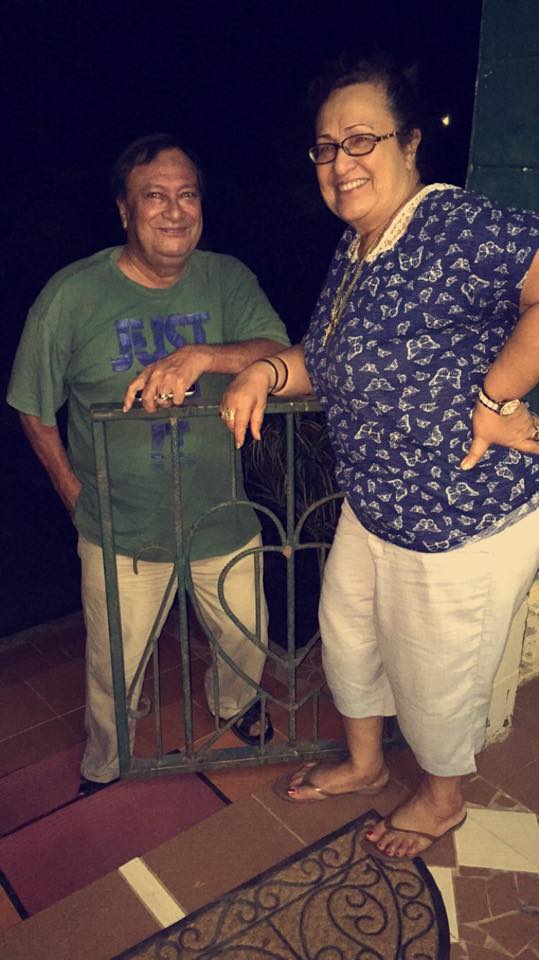
Laulu Asiata John Sesole Stanley (Grandpa) and Fofogali’i Lilly Grey-Stanley (Grandma)

Some of my favourite memories are the stories my uncle, Sale (Joe Stanley), would share with Mum and me. He would laugh as he told us that one of his jobs on the plantation was to delegate the work of vele le vau—clearing the weeds and tending the cacao trees. Then, with a cheeky smile and a sideways glance that always let us know a good story was coming, he’d confess that he gave everyone else the biggest sections of the plantation to weed while he kept the smallest patch for himself. That way, he’d finish first and disappear, off to ga’a – off on his own adventures.

We would all laugh, but beneath the humour was a reminder of life on the plantation. Every family member had a role. Every tree was cared for by hand. The work was shared, the stories were shared, and those moments – of hard work, laughter and family – became just as much a part of our cacao heritage as the harvest itself.


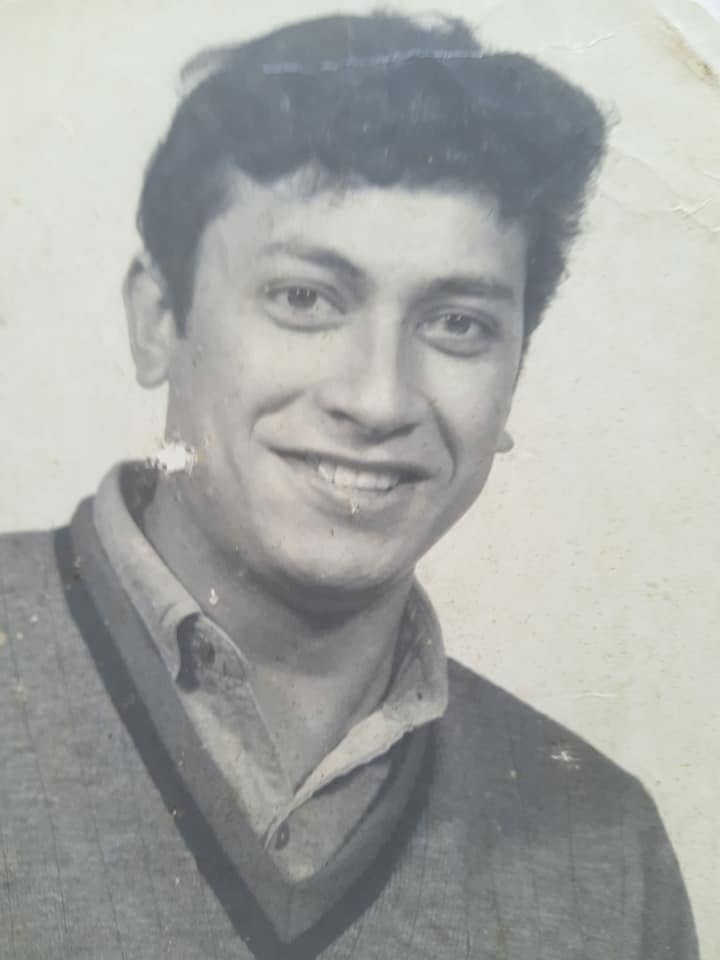
Ulugia Sale (Charles) Joseph Stanley

In 2023, I was deeply honoured to receive my chiefly title, Lolopō. I accepted it with humility, knowing it was not simply an honour but a responsibility—one that I will spend a lifetime growing into. It strengthened my commitment to serve not only my own family, but every family our cacao connects with: the farmers who nurture it, the hands that craft it, and the communities who gather around a shared cup. Like Matali’i itself, it reminds me that we are part of something much greater than ourselves, and that our role is to care for what has been entrusted to us so future generations may flourish.

When we prepare cacao, we are continuing a tradition of gathering people together. Around the Pacific, food and ceremony have always gone hand in hand. We share stories, remember our ancestors, strengthen relationships and give thanks for another season. Cacao has become our vessel for those same moments of connection.

Matali’i also reminds us to pause.

To reflect on the year that has passed.
To honour those who are no longer with us.
To celebrate the people walking beside us today.
And to plant seeds—both in the soil and in our hearts—for the future generations who will one day tell our stories.

As the stars rise once again, we offer our deepest gratitude to our family, our farmers, our customers and our wider Living Koko community. Thank you for walking this journey with us and for helping keep these traditions alive.

May the season of Mataali’i bring you rest, renewal and the courage to begin again.

Ia manuia le vaitau o Mataali’i

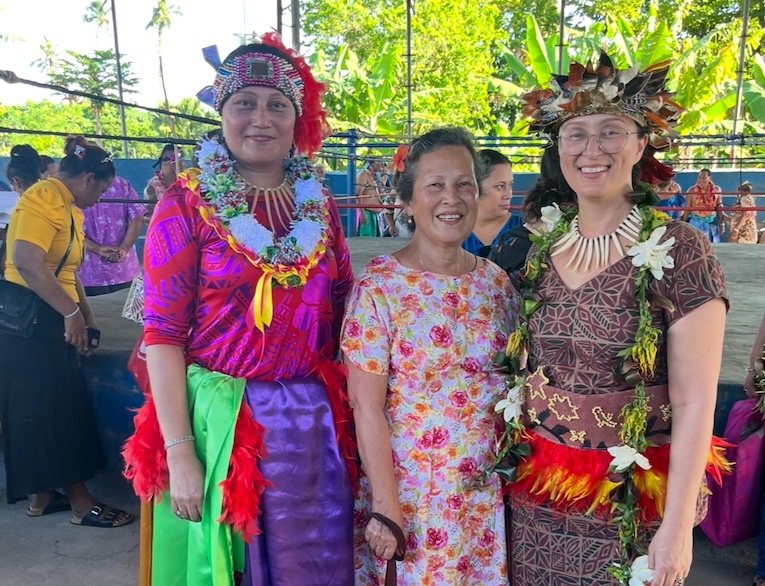
Lolopō Cyprian Fruean-Posesione (Cousin), Lucia Henrietta Phoebe Preuss (mum) Lolopō Phoebe Preuss (me)

Wintering: What the Cold Season Can Teach Us About Slowing Down

Wintering: What the Cold Season Can Teach Us About Slowing Down

There is a quiet wisdom that arrives with winter.

The days shorten. The mornings ask us to linger a little longer beneath the blankets. Trees release their leaves. Animals retreat to rest. The earth itself appears to pause….Yet so often, we resist.

We continue to move at the pace of summer, pushing through exhaustion, filling every hour, believing productivity is the measure of a life well lived. When winter comes, we often treat it as something to survive rather than something to embrace.

But what if winter wasn’t asking us to work harder? – What if it was inviting us to become quieter?

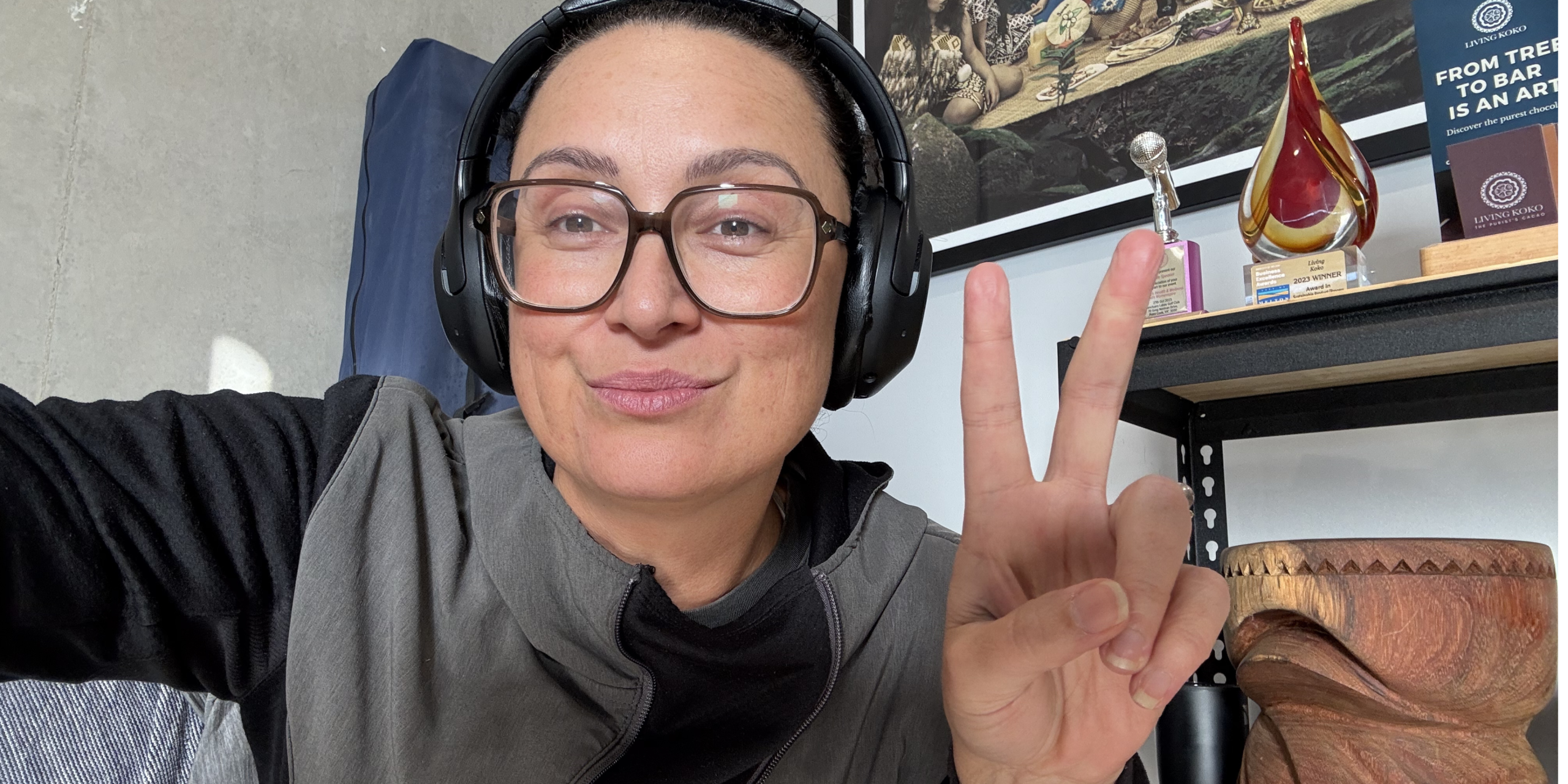
I spent last weekend with my headphones on, not because I wanted music non-stop, it was actually to cut out the ongoing noise in the house. It let everyone know I was out of bounds lol, I just wanted my own company…and hoped no one took it personally.

The idea of wintering is not about doing nothing. It is about honouring the natural seasons of life. Just as the land needs time to replenish before new growth appears, people also need seasons of restoration and I needed deep rest with only the capacity for my own thoughts.

For many Indigenous cultures across the Pacific, life has always followed the rhythms of nature rather than the demands of the clock. There is an understanding that community, food, movement, storytelling and ceremony each have their season. Rest is not laziness—it is preparation.

Gathering around warm food, sharing stories, singing together and caring for one another have long been ways of moving through the colder months. Connection itself becomes medicine. But after the first half of this year I just needed to tune into my own thoughts and what I needed.

 I had no more space to give other…so tuning out was tuning in and helping creating space.

Space to breathe.

Space to listen.

Space to reconnect with ourselves and with each other.

In a world that celebrates speed, choosing slowness can feel almost rebellious.

Slowness allows us to notice the warmth of the mug in our hands.

To watch the steam rise.

To hear the rain outside.

To truly taste what we are consuming instead of rushing to the next task.


These small rituals have become my anchors. Sometimes we don’t need the candles, the incense, just the moment to give ourselves permission.

Research increasingly supports what many traditional cultures have always understood: slowing down can help regulate our nervous system, reduce stress and deepen our sense of wellbeing. While winter encourages us inward, it also offers an opportunity to restore the energy that constant busyness quietly takes away.

Perhaps this winter doesn’t need another productivity challenge.

Perhaps it needs a new evening ritual to invites the calm warmth into your home.

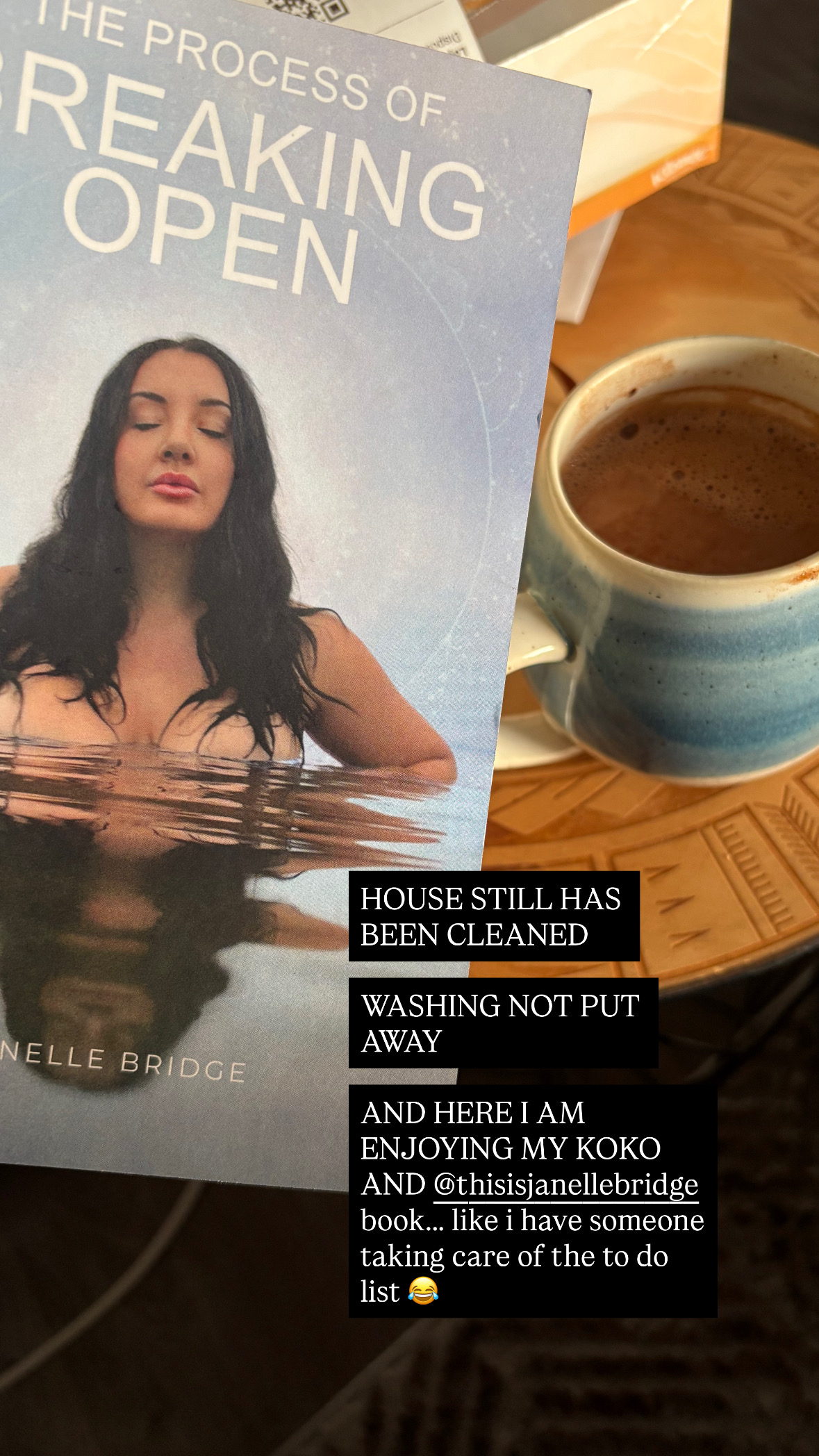
When I finish work…I light a candle, make a cup of koko, wrap myself in a blanket and read a chapter of a book. This weekend it was “The Process of Breaking Open” by Janelle Bridges. 

I’d read a chapter and then pottered around reflecting on the questions she was asking in each. This brought so much gratitude and depth into my weekend and in the simple silence I understand that Winter doesn’t ask us to bloom, it asks us to build strong roots because when spring arrives growth comes naturally – not because we forced it but because we allowed ourselves the time to restore.

This season, give yourself permission to winter.

Slow down.

Gather with those you love.

Nourish your body.

Honour your spirit…put on those headphones lol

And remember that sometimes the most meaningful growth happens beneath the surface, where no one else can see it.

At Living Koko, we believe wellness isn’t found in doing more. Sometimes, it’s found in slowing down enough to remember who we are.

Winter Restore: Rituals of Warmth, Restoration & Gentle Beginnings

Winter Restore: Rituals of Warmth, Restoration & Gentle Beginnings

There is something winter asks of us that summer never does.

Summer calls us outward. Winter calls us home.

Not just to our houses, but back to ourselves.

To slower mornings. To warm cups held between cold hands. To steam rising before the sun fully wakes. To rituals that soften the nervous system and remind the body it is safe.

For many of us, the middle of the year arrives carrying exhaustion. The adrenaline of the first months wears thin. Calendars stay full. The weather cools. Our bodies begin whispering for rest long before we are ready to listen.

And yet, winter has always been a season of restoration. Not laziness. Not stopping. Restoration.

Nature has always understood this. Trees pull inward. The earth slows. Even the ocean changes rhythm.

Perhaps we were never meant to move at the same speed all year long.

At Living Koko, winter reminds us of the old ways. Of kitchens before sunrise. Of cacao prepared slowly. Of tea shared in conversation. Of the comfort found in simple rituals repeated with care.

Not because they are trendy. Because they are human.

The Ritual of Beginning Again

There is power in how we begin the day.

Before the notifications. Before the demands. Before the world asks us to become everything for everyone else.

Winter mornings invite gentler behaviours. A slower start. A deeper breath. A cup made intentionally instead of rushed.

Restoration often begins in the smallest moments. Not in dramatic transformations. But in choosing warmth. Again and again.

A warm drink. A few quiet minutes. A body nourished instead of pushed.

These small rituals become anchors. They tell the nervous system: You do not need to sprint through life to deserve rest.

Why Warmth Matters

Warmth is more than temperature.

Warmth is emotional. Cultural. Ancestral.

Warmth is the memory of someone preparing something for you with care. Warmth is sitting at a table together. Warmth is steam curling into the air while rain taps against the windows. Warmth is feeling held.

For generations across the Pacific, cacao and warm beverages have carried connection. Not simply consumption. Connection.

A pause. A gathering. A moment to settle the spirit.

Modern life teaches us speed. But ritual teaches us presence.

And presence changes everything.

Tea, Cacao & Winter Rituals

This winter, we are leaning into rituals that restore rather than deplete.

Our cacao husk teas and drinking cacao were never created to be rushed. They were created for moments like these.

For mornings where the body needs gentleness. For evenings where the mind needs softening. For people learning how to return to themselves after seasons of overgiving.

Some mornings restoration looks like:

  • Drinking tea before touching your phone
  • Standing barefoot in the early light
  • Taking three deep breaths before the day begins
  • Choosing nourishment instead of urgency
  • Letting warmth reach the body before stress does

These are not grand wellness trends. These are old human rhythms.

And perhaps winter is inviting us back to them.

Singapore, Fang Studio & the Power of Cultural Exchange

Singapore, Fang Studio & the Power of Cultural Exchange

Some journeys don’t change what you are building.
They confirm the path you’ve been walking all along.
Singapore simply reminded us we were being guided, held, and moved with alofa.

Before the expo halls, the long days, swollen feet, and endless cacao samples, we were welcomed into the beautiful space of Fang Studio by Kenny and Min — two people who didn’t simply host us, but embraced us like family.

From the moment we arrived, there was a knowing that this experience would move beyond product and into something far more human…connection, presence, and alofa.

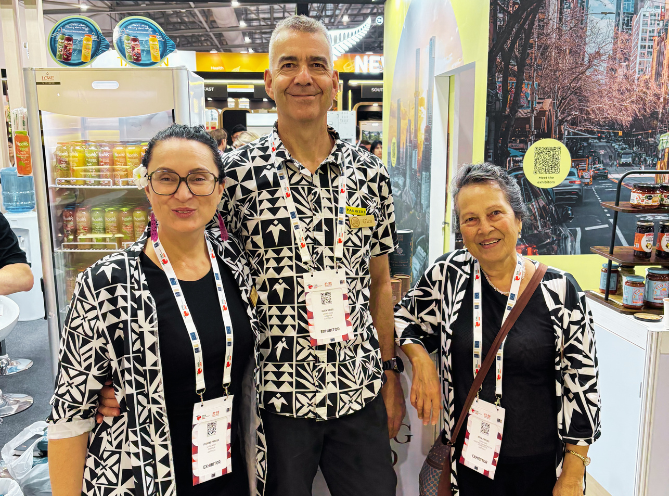
We were also deeply grateful to have my mother, Lucia Henrietta Phoebe (Stanley) Preuss, (Etta) travelling alongside us — the matriarch of our family and one of the quiet pillars behind Living Koko. In the most exhausting moments, when the days became long and our bodies felt heavy, she kept our spirits lifted. Calm, steady, nurturing. The kind of woman who brings gentle power into every room without needing to announce it.

Through her, we were also introduced to her beautiful friend Aunty Pele Dawson, whose alofa wrapped around us throughout the entire trip. There is something sacred about being held by women who carry wisdom, softness, humour, resilience, and cultural understanding all at once.

We felt deeply grateful for the presence, guidance, and experience of such incredible women beside us.

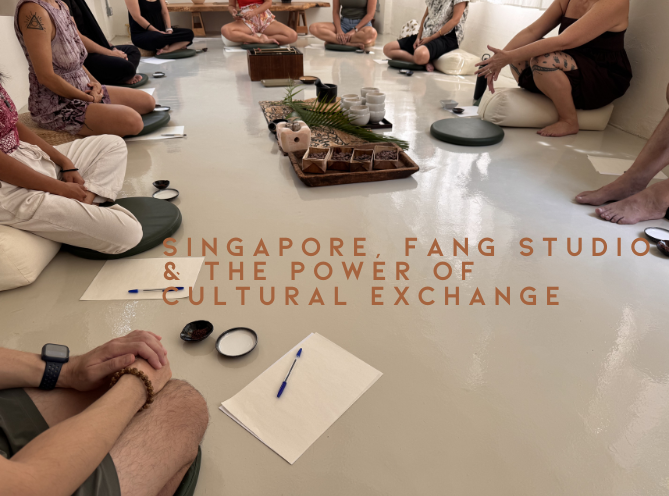
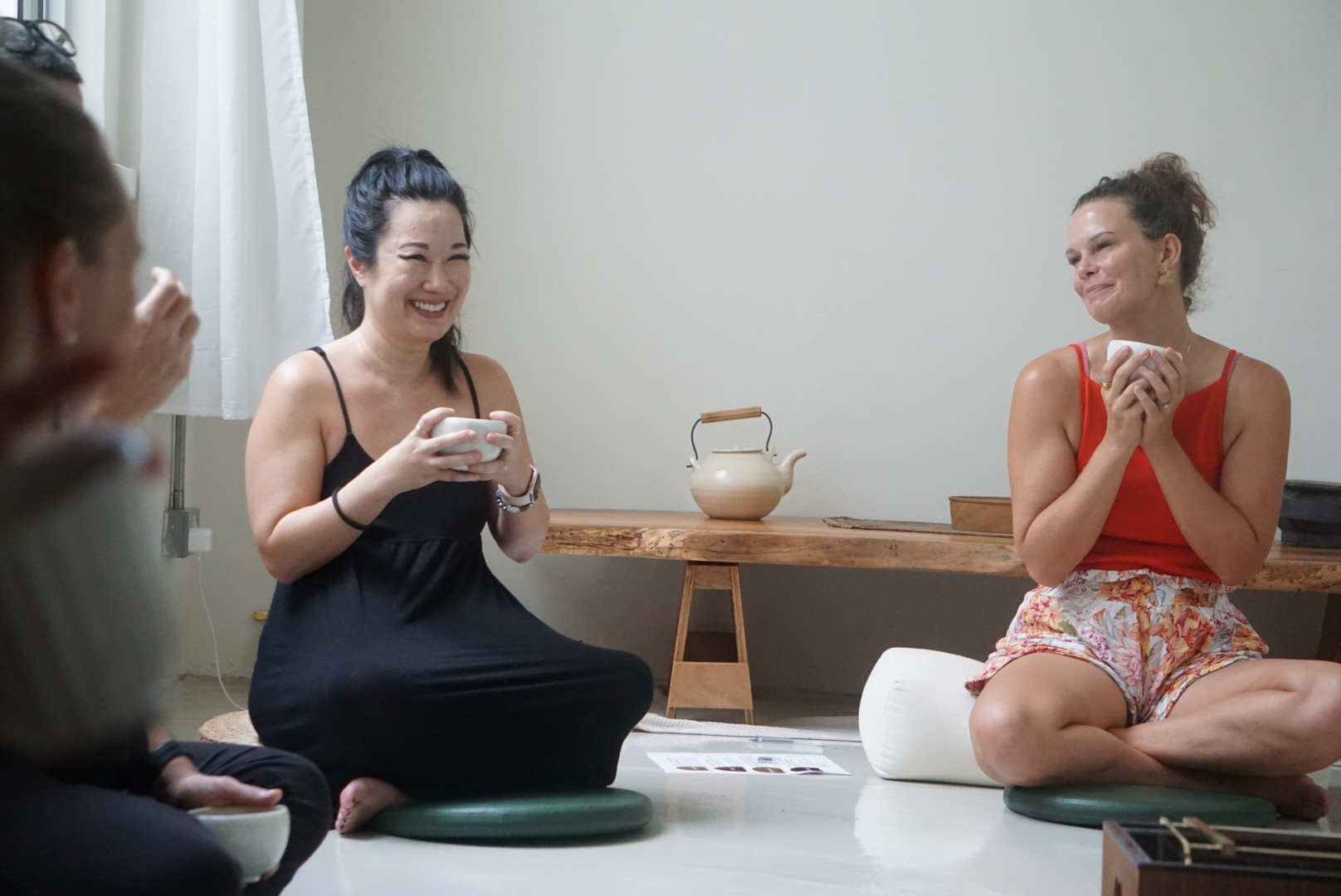
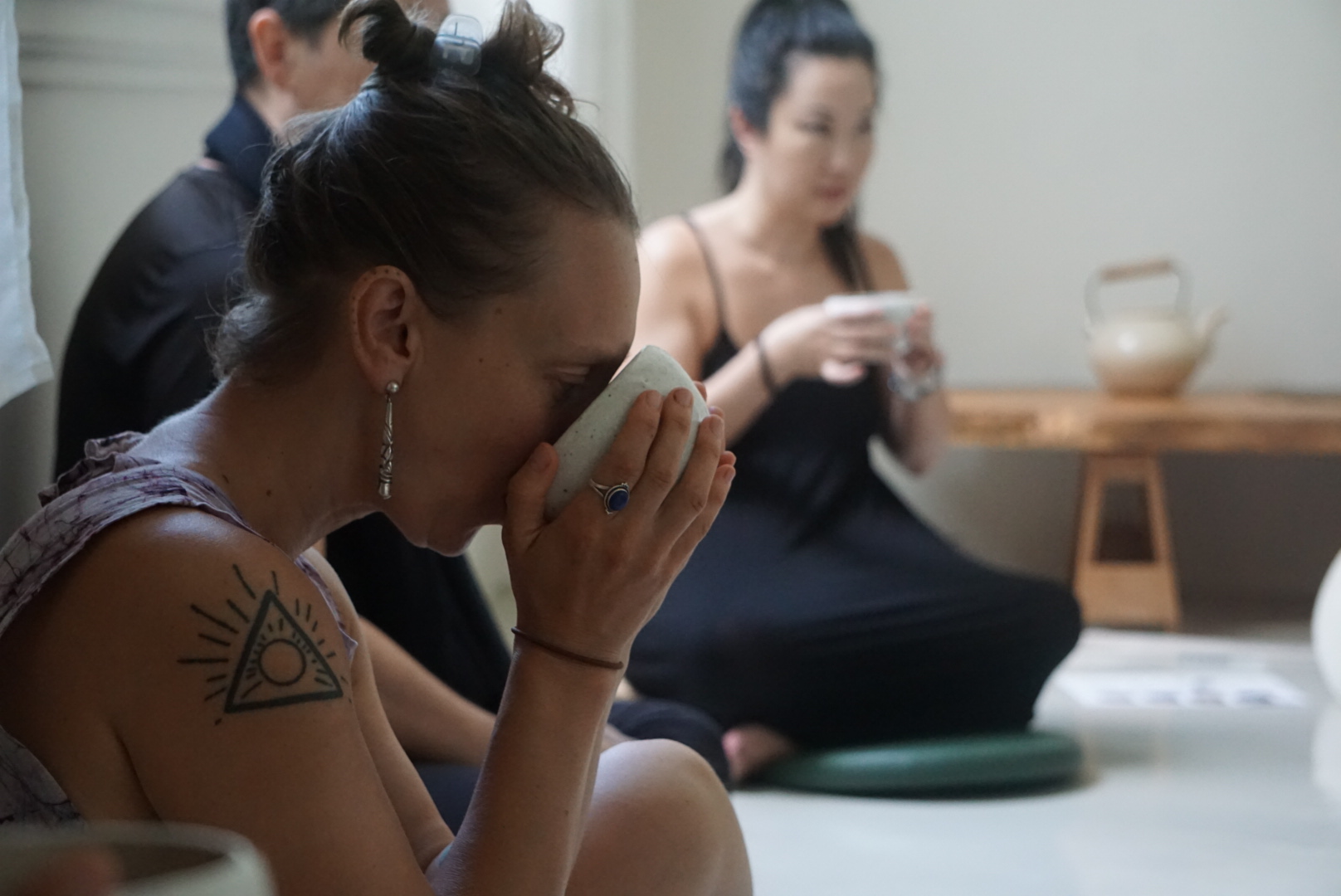
Our time together began with cultural exchange through tea ceremony at Fang Studio. Slow movements. Quiet conversation. The kind of presence that reminds you traditions still matter in a world obsessed with rushing. We shared stories, values, practices, and philosophies from different parts of the Moana and Asia, discovering how deeply connected our cultures already are through ritual, hospitality, and community care.

The following day, we offered a cacao connection gathering for the Fang community and what unfolded was something deeply special.

Through the silent reflection in tending to our cacao – Conversations then opened. Laughter echoed through the room. Emotions surfaced gently, held by cacao, breath, and community. These are the moments that remind us cacao has always been medicine for tender togetherness long before it became a product on a shelf.

Kenny and Min continued supporting us throughout the entire week, alongside an incredible circle of people who gathered around our cacao with so much generosity and belief. They checked in on us, guided us, shared our story, introduced us to people, and quietly advocated for us in rooms we had just stepped into.

Support built through trust, reciprocity, and shared values.

Because of these connections, retailers began arriving at our expo space already knowing about Living Koko. They had heard whispers about “the Samoan cacao women,” about ceremony, about ethical sourcing, about the feeling people experienced drinking our cacao. Instead of cold introductions, we were meeting people already curious, already connected, already wanting to explore what the next step could look like together.

It reminded us that real business still happens through people, community.

Through sitting together before selling to one another.

We are deeply honoured that Fang Studio will continue sharing Living Koko cacao within their space, and we already hope to return later this year to create ceremony together again.

Some collaborations feel transactional.

This never did.

This felt like family finding family across the ocean.

Fa’afetai tele lava Singapore.
We left tired, full-hearted, and deeply grateful.

Dancing Through Grief, Breathing into Connection

Dancing Through Grief, Breathing into Connection

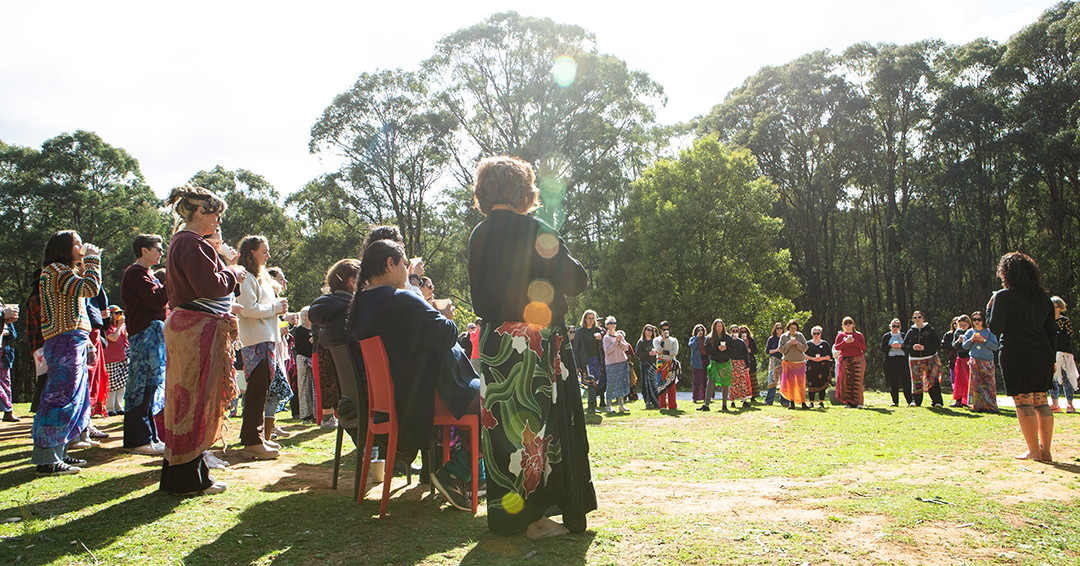
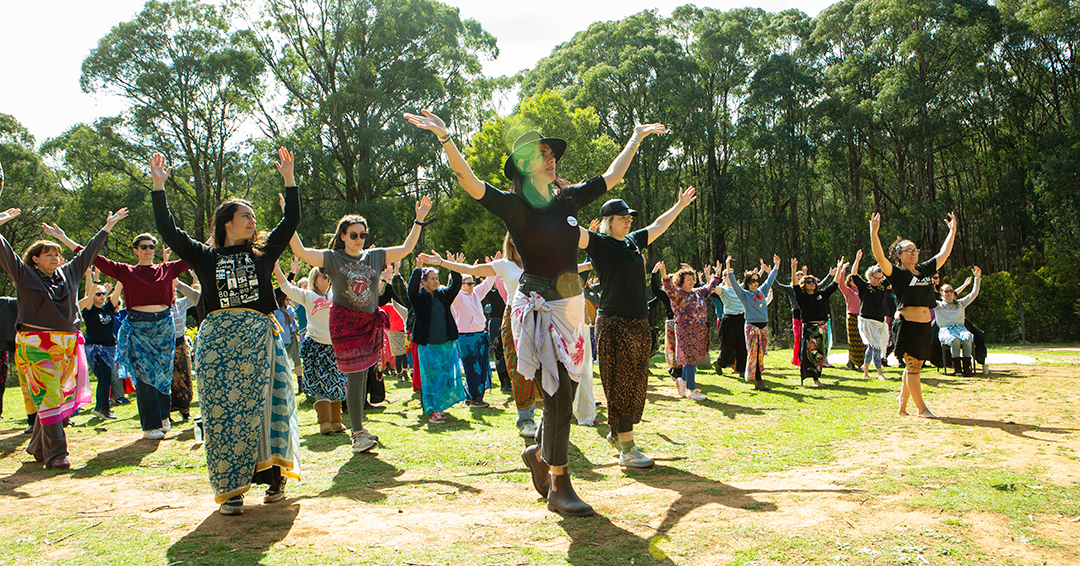
This past weekend, I had the honour of guiding a Breathwork, Cacao, and Pasifika Movement workshop with the extraordinary women of Pitch Face Choir. Over one hundred women gathered — hearts open, bodies ready, voices alive. We came together to breathe, to move, to reconnect with the lands and waters that have carried us.

Leading up to this, my own heart was heavy. I had just received the news that my uncle — my mum’s brother, Joe Stanley or as we called him Uncle Sale — had passed away. He was a man full of music, stories, and wisdom. An economist who travelled the Pacific, helping island nations understand their economic positions. A man who, when I was six years old, welcomed us to his home in New Caledonia with a piano, laughter, and endless songs.

He would play Tom Jones, Elvis Presley, and Engelbert Humperdinck while I twirled around him — his music filling the room with joy. I can still see his eyes lighting up as he spoke with Mum about their childhood, their years on the cacao plantations. I used to record their conversations, wanting to hold onto every story — how he’d cleverly assign the hardest weeding jobs to his brothers and sisters, keeping the easier tasks for himself, laughing as he told it. He carried so much knowledge about how their father, my papa, ran the plantations — the rhythms of business, the seasons of harvest, the value of labour and land.

When he spoke about those days, his voice softened, and his eyes shone, tears would appear. Those memories were his music too.

So as I entered the workshop space, I carried him with me. His stories. His laughter. His songs.

We began with breathwork — breathing in our intentions, breathing out our blessings for the community we moved with. The cacao grounded us, connecting us to the earth, to memory, to the unseen. Then we dedicated our movements — each woman dancing for someone or something that had supported her through life’s storms: a loved one, a river, a tree, a mountain.

As we moved, I danced for my uncle — for the piano, for the plantations, for all the stories he carried that now live in me.

We breathed, we wept, we laughed. Together, we softened into grace.
Because that’s what movement does — it brings us home to ourselves, to each other, and to those we’ve loved who now move with the wind.

For my uncle —
whose hands once touched cacao, whose songs filled our hearts,
and whose laughter still dances in the breath between worlds.

A Letter from Lolopō Phoebe

A Letter from Lolopō Phoebe

Dear Living Koko community,

This is a hard letter to write.

From the beginning, Living Koko has been about more than chocolate. It has been about honouring the lands and hands that grow our cacao, respecting the ocean that connects us, and holding fast to traditions of care, culture and community. Every bar, every cup of drinking cacao, every tea leaf has carried that story.

But today, I need to share another story—the one of what it takes to keep a small, ethical business alive in the world we’re in.

On 1 September, our prices will increase.

This decision doesn’t come lightly. For months, we’ve been absorbing the rising costs of:

  • Ethical Cacao: Prices have climbed sharply on the global market, and because we will not compromise on fair pay for our farmers, we cannot look for “cheaper” beans.

  • Sustainable Packaging: The materials we use to stay zero-waste and kind to the earth are more expensive than ever.

  • Taxes & Levies: Small businesses like ours are carrying a heavier load from new government charges.

We’ve carried these costs as long as we could, because we know how much every dollar matters in our community. But to continue offering you cacao that is vegan, ethical, zero-waste, and slave-free, we must now share that weight.

Many of you have asked us: “Why is your ceremonial grade cacao priced lower than other brands?”

The answer is simple—we are a very small team. Behind the scenes it’s literally just two of us, side by side in the factory each day, working hard to craft, pack, and send your cacao with care. It’s also this same tiny team creating our marketing, sharing our stories, and running events—with the support of our wider Koko Crew when they can step in.

Because of this, and because we source our beans directly from our farmers—our family, our community—we’ve been able to keep our prices lower. When you speak to us, you are speaking directly to those connected to the land, honouring our heritage and the people who have grown cacao for generations.

We also made a conscious choice: to keep our ceremonial grade more inclusive, accessible to a wider community who might otherwise be excluded from these deeply grounding practices.

I feel sadness in writing this, because I know price rises touch everyone. But I also feel something else—gratitude.

Gratitude that you have walked this path with us. Gratitude that you choose to support not just chocolate, but a movement. Every time you buy from Living Koko, you are investing in Pacific Island farmers, in cultural traditions, and in a way of doing business that puts people and the planet before profit.

We remain committed to transparency, to care, and to joy. And we remain here, creating with love.

Thank you for standing with us through every shift and challenge. Your support doesn’t just keep us going—it keeps this vision alive for future generations.

With love and respect,
Phoebe Preuss
Founder, Living Koko