
Our journey into Singapore began with an exchange.
In April, we ran an event with Kenny and Min from Fang Studio and shared cloth made from paper mulberry: Kenny’s from Taiwan, ours from Samoa.
In Samoa, our decorated barkcloth is called siapo, made from the inner bark of the u‘a, carefully prepared and beaten into cloth. Paper mulberry travelled with Austronesian voyagers into the Pacific; research tracing its ancestry connects Pacific plants to Taiwan. In our hands, we held a reminder of journeys much older than our own.
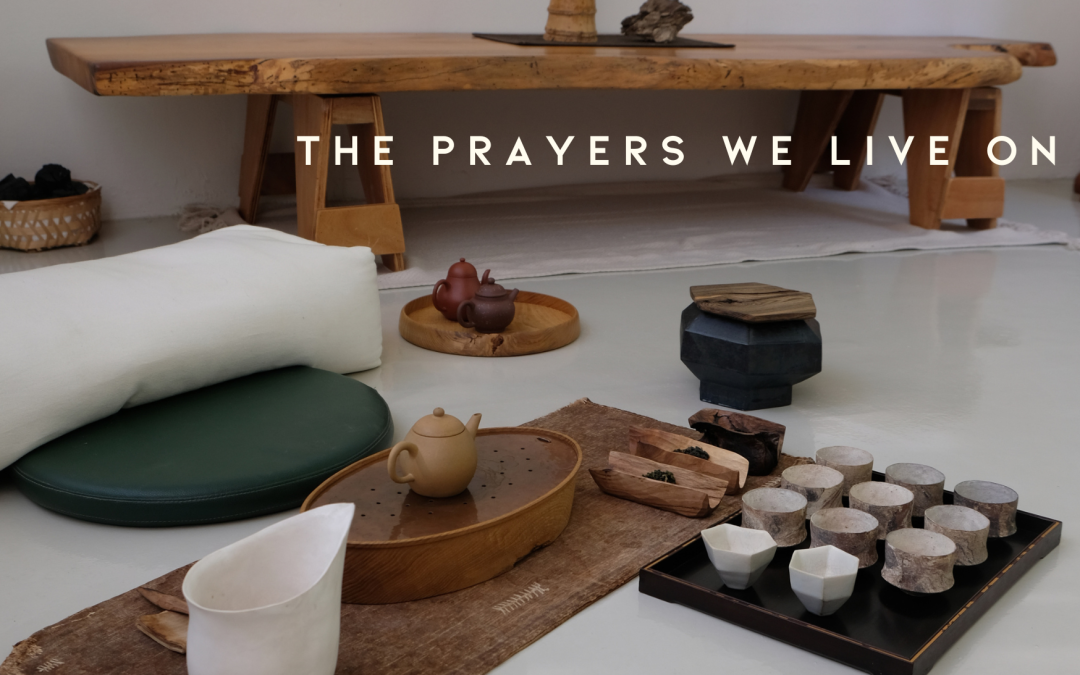
When we returned on the first weekend of October, that relationship deepened. Together, we created a cacao ritual and helped facilitate Across Oceans: A Dialogue between Tea and Cacao.
What unfolded reached far beyond the cup.
People spoke about belonging: being Singaporean Chinese while feeling distant from Chinese roots, or carrying Chinese heritage alongside a deeply felt Indonesian identity. We heard the longing to feel settled when the names others give us cannot hold the fullness of who we are.
These stories belong to those who shared them. What I carry here is my reflection on the tenderness of that gathering.
We spoke of parents and grandparents who had escaped war and upheaval. Leaving had made another life possible, while placing distance between generations and the places that once held them.
Sometimes a family’s silence is a way of surviving. Our elders may struggle to speak about home because remembering brings pain. We can long for their stories while respecting what they are not ready to share. Reconnection needs patience.
There is privilege in building a life somewhere safer. There can also be grief in what we leave behind. Both can live within us.
For me, as a Samoan woman living and working on Aboriginal land in Australia, belonging also carries responsibility. My love for Samoa travels with me, alongside my responsibility to honour the First Peoples of the place where I now make my life.
We can nurture our own roots while respecting the roots already holding the ground beneath us.
Listening to stories of ancestral displacement, I thought about families enduring it today. In Palestine, families are separated from homes and land. In West Papua and other Indigenous communities in Indonesia, ancestral places face the pressures of extraction. In the Democratic Republic of the Congo, wealth beneath the soil can bring suffering to those living above it. Each place has its own histories, resistance and hopes and ongoing loss and death.
Closer to home, I worry about a quieter economic colonisation moving through our Pacific Islands, dressed as progress. What happens when foreign agreements place the future of custodial lands in other hands? When forests become figures in carbon-credit contracts, or promised infrastructure is poorly built, difficult to maintain, or tied to obligations our children inherit?
Our communities deserve roads, healthcare, education and opportunity – but also we deserve the power to shape them. Must we loosen our relationship with the land to “catch up” to a world already showing signs of decay, mentally, physically and spiritually?
It brings me back to reciprocity: who gives, who benefits, and who carries the cost?
At Fang Studio, we also spoke about time and ancestral predictions seemingly coming into view. There was a feeling that past and present could meet, that our lives might hold the unfolding of hopes spoken long before us.
I thought about the prayers we live on. Our elders’ wishes that someone after them might know more safety, more freedom, a chance to keep going.
There were tears, love and understanding. People shared practical tools and ways of being. We recognised cultural commonalities without needing every story to resemble our own.
I return, too, to the cloth we exchanged in April. An account of canoe building on Raivavae describes tapa used with a sealing mixture along wooden joints, helping keep water out.
For me, this offers an image of community: the care we place between us, the patient listening, the relief of being truly seen. Our conversations can help us tend to places where loneliness and grief find their way in. We can help one another stay afloat.
In Samoa, koko means cacao and blood. Sharing it carries a relationship to land, family and the hands that make each cup possible.
Cacao gave us something to gather around. The care people brought made the conversation possible.
As we celebrate Living Koko’s arrival in Singapore, these are the relationships I hope we keep nurturing: spaces where we can give and receive, remember culture gently, and retain ownership of our stories.
From cloth shared in April to cacao shared in October, we have been learning what it means to meet across oceans.
May the prayers that carried us this far grow into care for those still to come.
With gratitude to Kenny and Min, Fang Studio, and everyone who gathered with us.